

- English
 Español
 Português
 русский
 Français
 日本語
日本語 Deutsch
 tiếng Việt
 Italiano
 Nederlands
 ภาษาไทย
 Polski
 한국어
한국어 Svenska
 magyar
 Malay
Malay বাংলা ভাষার
 Dansk
Dansk Suomi
Suomi हिन्दी
 Pilipino
 Türkçe
 Gaeilge
 العربية
 Indonesia
 Norsk
Norsk تمل
تمل český
český ελληνικά
 український
 Javanese
 فارسی
فارسی தமிழ்
தமிழ் తెలుగు
 नेपाली
 Burmese
 български
 ລາວ
ລາວ Latine
 Қазақша
 Euskal
 Azərbaycan
 Slovenský jazyk
 Македонски
 Lietuvos
 Eesti Keel
 Română
 Slovenski
 मराठी
मराठी Srpski језик

Products
- Boom Sprayer
- Air Blast Sprayer
- Lawn Mower
- Rotary Tiller
- Tractor Flail Mower
- Wheel Rake
- Land Leveler
- Fertilizer Spreader
- Manure Spreader
- Rotary Rake
- Rake Sun
- Plow
- Seeder Machine
- Agricultural Machinery Transmission Shaft
- Automatic Roll Tube Sprayer
- Gear Pumps
- Hydraulic Valve
- Bundled Straw Net
- Seedling Killing Machine
- Ridging Machine
- Irrigation System


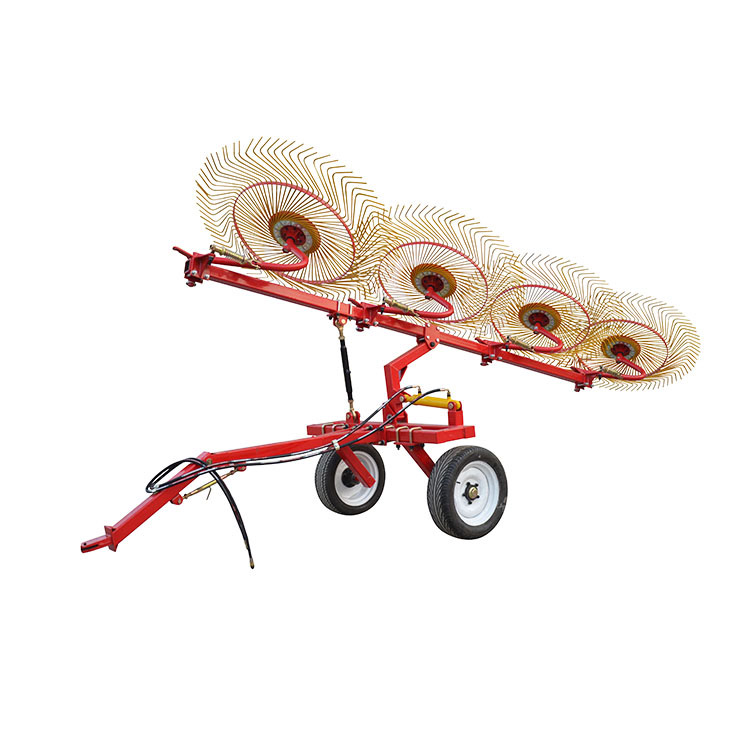
Field Hay Rakes
Shuoxin® Field Hay Rakes are mainly used to conduct operations such as spreading, turning over, or gathering the fresh grass and straw laid out in the field after harvesting. By increasing the contact area between the materials and air, it accelerates the evaporation of moisture and promotes the transformation of fresh grass into hay.
Send Inquiry
Product Description
Working Principle
The working principle of the field hay rakes is mainly based on the power transmission of the tractor. It achieves precise control of the materials through the structured movement of the roller and harrow components, and enables flexible adjustment of operation parameters to adapt to different field conditions and material states.
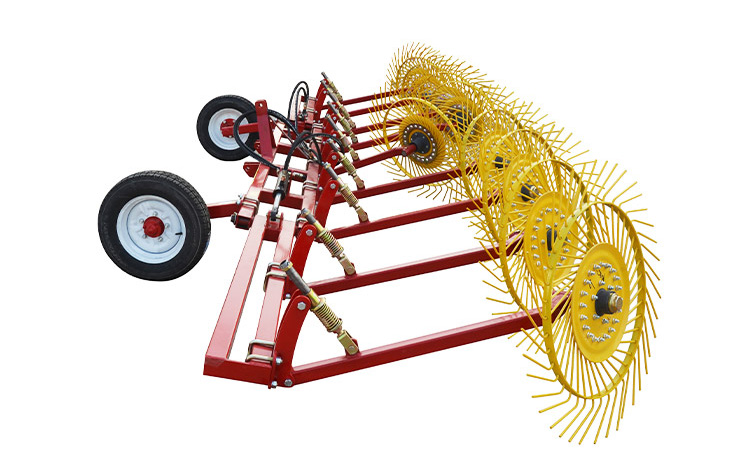
Work process
1. Pre-harvest drying: After the field hay rakes harvesting fresh grass, a wide-area drying method is adopted. The width of the spreading rollers is adjusted to the maximum, and the moving speed is slowed down. The fresh grass is evenly spread into a thin layer of 3-5 centimeters thick, using sunlight and wind to accelerate the evaporation of surface moisture. Usually, the first turning and spreading operation is carried out after drying for 2-4 hours.
2. Mid-term drying and spreading: When the moisture content on the surface of the hay drops to 30%-40%, the drying and spreading operation should be carried out. The moving speed should be reduced, and the moist materials from the lower layer should be turned to the surface to ensure uniform evaporation of moisture and avoid local mold growth. The frequency of drying and spreading can be adjusted according to the weather conditions.
3. Post-harvest gathering: When the dry grass reaches the standard moisture content, the mode is switched to gathering. The scattered dry grass is gathered into standard grass strips to prepare for the subsequent picking and baling operations. During the gathering process, the density of the grass strips should be controlled to avoid excessive density causing internal moisture to remain, and too loose a density will affect the baling efficiency.
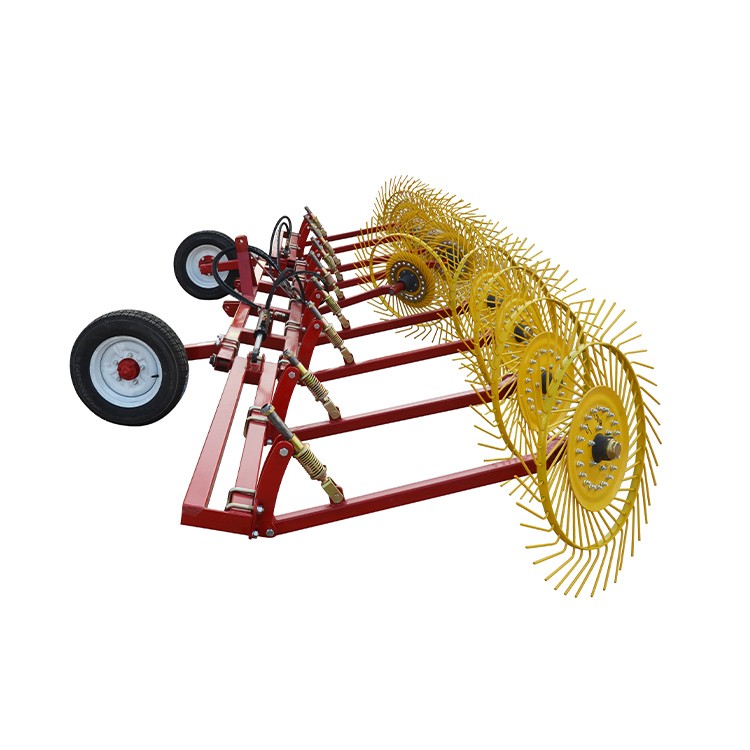
The field hay rakes are designed to be towed by a tractor and can perform tasks such as spreading fresh hay, turning and raking dry hay, and gathering it. The rake's teeth are made of high-strength steel, which is durable and unlikely to break. It can be flexibly adjusted to change the angle and depth of operation, preventing soil from contaminating the hay. The operation is efficient and labor-saving, accelerating the evaporation of moisture from the hay, gathering it into standard bales, and being suitable for subsequent baling processes, as well as various materials such as wheat straw and pasture grass.
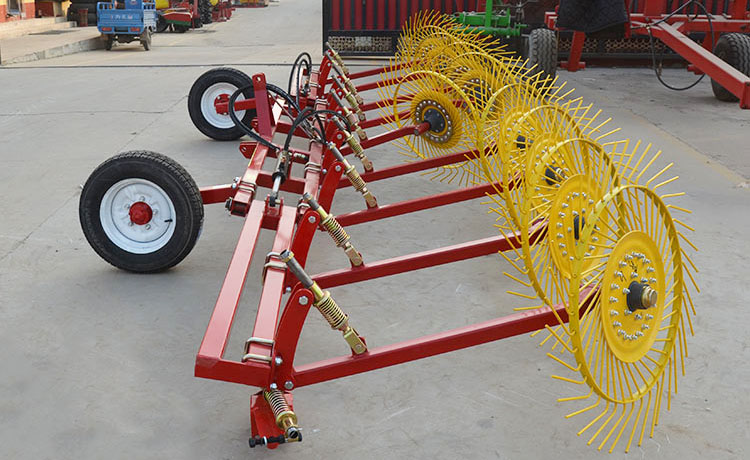
Hot Tags: Field Hay Rakes, China, Manufacturer, Supplier, Factory, Wholesale, Brands, Made in China, Quality, Cheap, Durable
Send Inquiry
Please feel free to fill your inquiry in the form below. We will reply you in 24 hours.





X
We use cookies to offer you a better browsing experience, analyze site traffic and personalize content. By using this site, you agree to our use of cookies.
Privacy Policy