

- English
 Español
 Português
 русский
 Français
 日本語
 Deutsch
 tiếng Việt
 Italiano
 Nederlands
 ภาษาไทย
 Polski
 한국어
 Svenska
 magyar
 Malay
 বাংলা ভাষার
 Dansk
 Suomi
 हिन्दी
 Pilipino
 Türkçe
 Gaeilge
 العربية
 Indonesia
 Norsk
 تمل
 český
 ελληνικά
 український
 Javanese
 فارسی
 தமிழ்
 తెలుగు
 नेपाली
 Burmese
 български
 ລາວ
 Latine
 Қазақша
 Euskal
 Azərbaycan
 Slovenský jazyk
 Македонски
 Lietuvos
 Eesti Keel
 Română
 Slovenski
 मराठी
 Srpski језик

Products
- Boom Sprayer
- Air Blast Sprayer
- Lawn Mower
- Rotary Tiller
- Tractor Flail Mower
- Wheel Rake
- Land Leveler
- Fertilizer Spreader
- Manure Spreader
- Rotary Rake
- Rake Sun
- Plow
- Seeder Machine
- Agricultural Machinery Transmission Shaft
- Automatic Roll Tube Sprayer
- Gear Pumps
- Hydraulic Valve
- Bundled Straw Net
- Seedling Killing Machine
- Ridging Machine
- Irrigation System


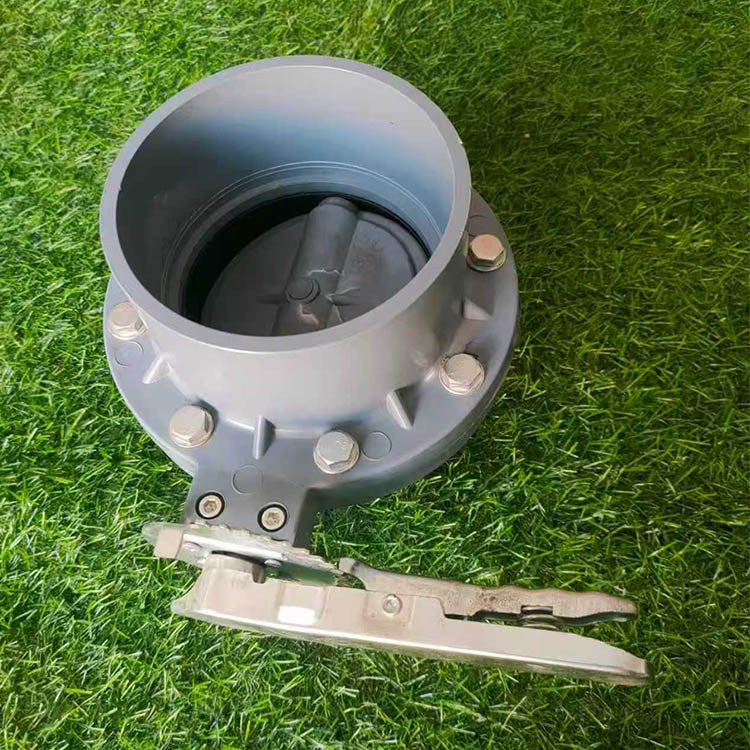
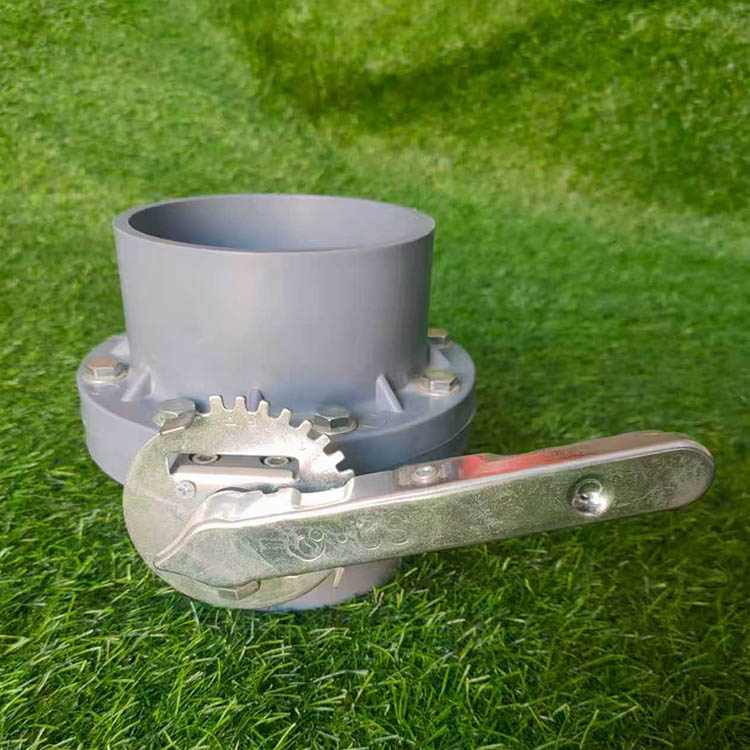
UPVC Socket Butterfly Valve
Shuoxin® UPVC Socket Butterfly Valve is a quarter-turn flow-control component designed for solvent-cement socket connections with UPVC piping. Available for bulk purchase, it is suitable for water treatment, aquaculture, irrigation and light-duty chemical transfer lines.
Send Inquiry
Product Description
1. Installation and Operating Performance
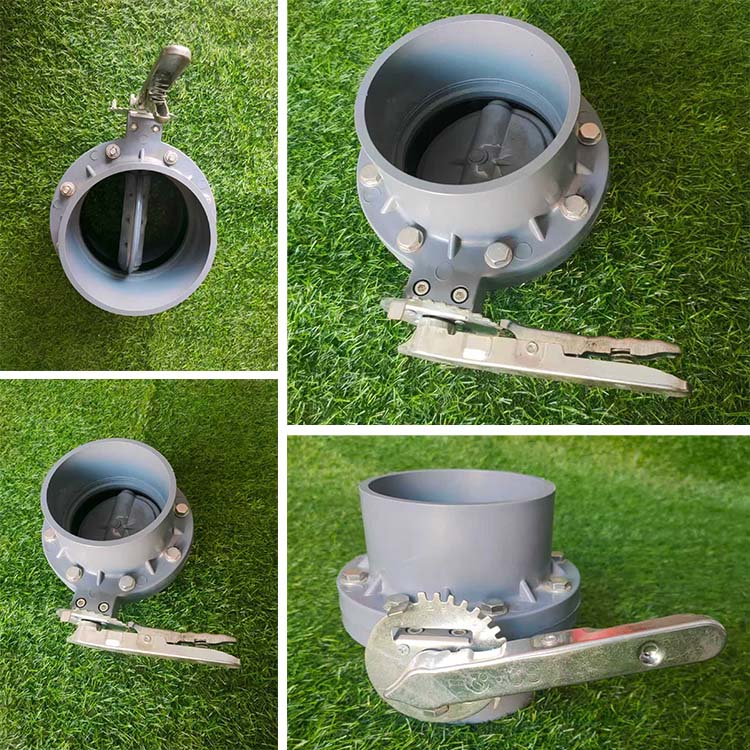
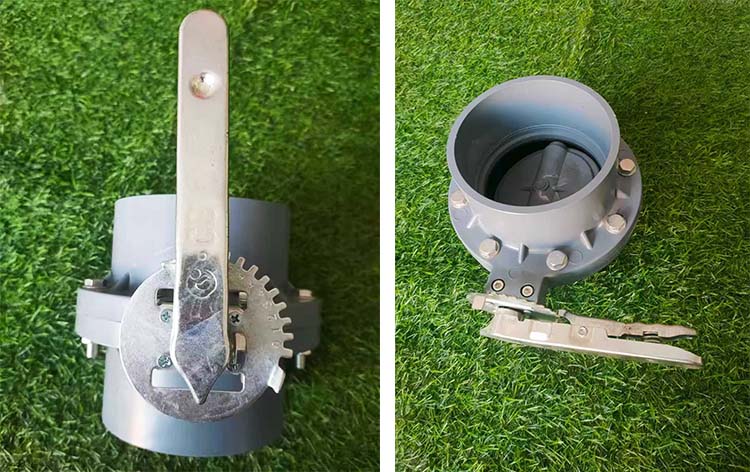
Fit primer and solvent cement into the machined socket bores, then push cleaned pipe ends fully into place until seated against the internal shoulder. The rigid grey outer housing has a smooth finish with no sharp injection flash. The red lever rotates through 90 degrees with smooth, low-friction operation, moving the disc from fully open to a tight shut-off position. The UPVC Socket Butterfly Valve handles chlorinated water and dilute acid without the metallic ion leaching associated with cast-iron alternatives.
2. Size, Pressure and Temperature Specifications
This valve accommodates DN50–DN200 (2–8 inch) pipe sizes and carries a PN10 pressure rating at ambient temperature. Its continuous operating temperature range is 0–60°C (32–140°F). Socket dimensions comply with ASTM D2467 and DIN solvent-weld joint standards, supporting compatibility with corresponding UPVC piping systems.
3. Material Construction and Sealing Options
The valve body and disc are moulded from virgin unplasticized PVC (UPVC). Field-replaceable seat options include EPDM for general water applications and FPM for more demanding dilute chemical service. A 304 stainless steel stem provides corrosion resistance within the plastic valve assembly.
4. Quality Inspection and Pressure Testing
Every UPVC Socket Butterfly Valve undergoes a shell hydrostatic test at 1.5 times its nominal pressure, followed by a seat leakage test before packing, as specified in the original quality-control requirements. Workshop inspection under LED lighting checks valve surfaces for visible pinholes, sink marks and material inclusions to maintain consistent product quality.
Because socket joints rely fully on solvent cement bonding, system designers must account for joint strength limits. One Southeast Asian aquaculture integrator faced unplanned downtime when a competitor’s mould‑recycled socket unit separated under pressure surge, flooding a juvenile fish‑rearing basin. Our moulding process uses 100% virgin UPVC pellet feedstock for our UPVC Socket Butterfly Valve to minimise this mode of failure. The lightweight build of this valve cuts overhead piping dead‑load compared to metal butterfly setups, ideal for roof‑mounted filtration loops and temporary irrigation zone manifolds.
Typical Applications
- Municipal & private water treatment: circulating chlorinated filtered water, reverse‑osmosis pre‑treatment loops
- Aquaculture & aquaponics: fresh‑ and brackish‑water distribution, zero heavy‑metal contamination risk for stock
- Agricultural irrigation: zone isolation for sprinkler and drip networks
- Light chemical processing: dilute acid‑alkali dosing, plating rinse circuits, wastewater effluent bypass lines
When you assemble this equipment, observe two hard constraints. Do not exceed PN10 working pressure at 20 °C; allow derating as fluid temperature climbs above 40 °C. Shield exposed outdoor installations from direct long‑term UV radiation unless you specify UV‑stabilised material compound. Mis‑aligned pipe stress transferred to socket ends will initiate cracking, so support adjacent piping independently rather than using this equipment as structural anchor point.
Technical Specifications
| Item | Specification |
| Connection Type | Solvent cement socket (SOC), ASTM / DIN compatible |
| Nominal Sizes | DN50 DN200 (2 8 inch) |
| Nominal Pressure | PN10 (145 psi) @ 20 °C |
| Operating Temperature | 0 °C ~ +60 °C continuous |
| Body / Disc Material | Virgin UPVC |
| Seat Options | EPDM / FPM (Viton) |
| Stem Material | SS304 |
| Operation | Manual lever, 90° quarter turn |
| Test Standard | ISO 12241 shell & seat hydrostatic testing |
| Installation | Bidirectional flow; solvent cement joint |
Frequently Asked Questions
Can it work with non‑UPVC pipe?
The socket bores of the UPVC Socket Butterfly Valve are dimensioned exclusively for UPVC outer-diameter pipes. Transition fittings are required when connecting to HDPE, metal or CPVC pipe runs. Solvent cement bonds only to matching UPVC surfaces.
What leakage rate should I expect on seat closure?
With correct installation and compatible elastomer seat, it achieves zero visible bubble leakage during seat hydrostatic test. Abrasive suspended solids carried by process fluid will accelerate seat wear and raise leakage over service life. Schedule periodic visual inspection for systems handling particle‑laden flow.
Is field replacement of the rubber seat possible?
Yes. You can disassemble the lever actuator and pull out the worn seat without cutting socket piping. Keep matching‑grade spare elastomer stock on‑site for planned maintenance shutdown windows.
Do you support custom UV‑resistant compound for outdoor uncovered installation?
UV‑stabilised UPVC compound is available upon request. Submit your site ambient‑exposure profile when you send over your RFQ.
What delivery lead‑time applies for bulk project orders?
Standard stock sizes ship within 14 working days. Non‑standard compound or special size configurations require extended production window. Submit your full bill‑of‑material so our engineering team can confirm timeline and commercial terms.
If you need datasheets, third‑party test reports or sample units for on‑site performance validation, send your project media profile, size list and target quantity through our inquiry channel. Our technical sales will respond within 24 working hours and walk you through seat‑material selection matched to your process fluid.
Related Categories
Send Inquiry
Please feel free to fill your inquiry in the form below. We will reply you in 24 hours.





X
We use cookies to offer you a better browsing experience, analyze site traffic and personalize content. By using this site, you agree to our use of cookies.
Privacy Policy